

Students Need More Words
Let me predict what will happen after you get comfortable using a core vocabulary board.
You’ll say, “Okay, but what about all the other words?”
And I get it. I really do. Because during thirty years of pushing into preschool classrooms, I asked that exact question myself — usually while staring at a board and mentally running through everything a kid might want to say during morning circle, art time, and snack. It’s a lot.
Those “other words” have a name: fringe vocabulary. Things like colors, numbers, names, classroom objects — words that are specific and contextual. They matter. But here’s the thing: they don’t belong in the same place as your core words, and figuring out that distinction changed everything for me.
Core Boards and Fringe Vocabulary — A Quick Refresher
Core vocabulary words are your workhorses. Go. Stop. Want. Help. More. Look. They travel across every activity, every context, every part of the day. A child can use “want” at snack, on the playground, during a story — anywhere.
Fringe vocabulary is more specific. Scissors. Blue. Dinosaur. Apple. Important words, absolutely — but tied to a moment, an activity, a context.
Students need both. The mistake I made early in my career — and I made it with great enthusiasm, bless my heart — was treating them the same way.
Examples of Fringe Vocabulary
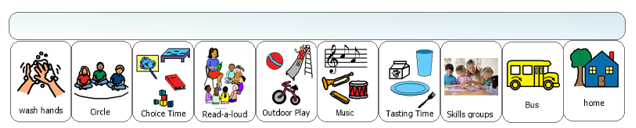
Daily Schedule

Art Supplies

Free Play Choices
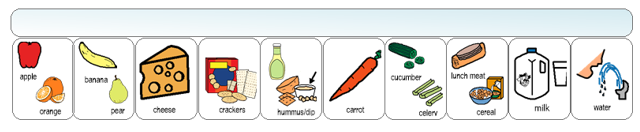
Snack Choices
When More Words Make Everything Worse
Once upon a time, many light-years ago, I kept adding vocabulary to a student’s board every time a new unit started. Butterflies for the science unit. Pumpkins for October. Holiday words. Season words. Before long, that board looked like a yard sale.
And the student? He stopped using it.
It wasn’t necessarily that he had too many words. The board had become visually overwhelming, hard to scan, and — crucially — inconsistent. The words kept moving around to make room for new ones, so he couldn’t build any reliable motor memory for finding them.
More words, less communication. It’s counterintuitive, but I’ve seen it happen more times than I can count.
The Thing That Actually Helps: Keep Core Stable
One of the greatest gifts of a core vocabulary system is that the words live in the same place every single day. Over time, a student doesn’t have to search for “help” — their hand just knows where to go. That’s motor planning, and it’s powerful.
But it only works if we protect it. The moment we start shuffling core words around to squeeze in fringe vocabulary, we chip away at the very thing that makes the system work.
So the rule I’ve landed on after all these years: the core board is sacred. Don’t move things around. Don’t crowd it. Leave it alone.
So Where Does Fringe Vocabulary Actually Live?
Here’s the specific solution I’ve landed on — and I mean specific, because after thirty years I’ve gotten a little particular about this.
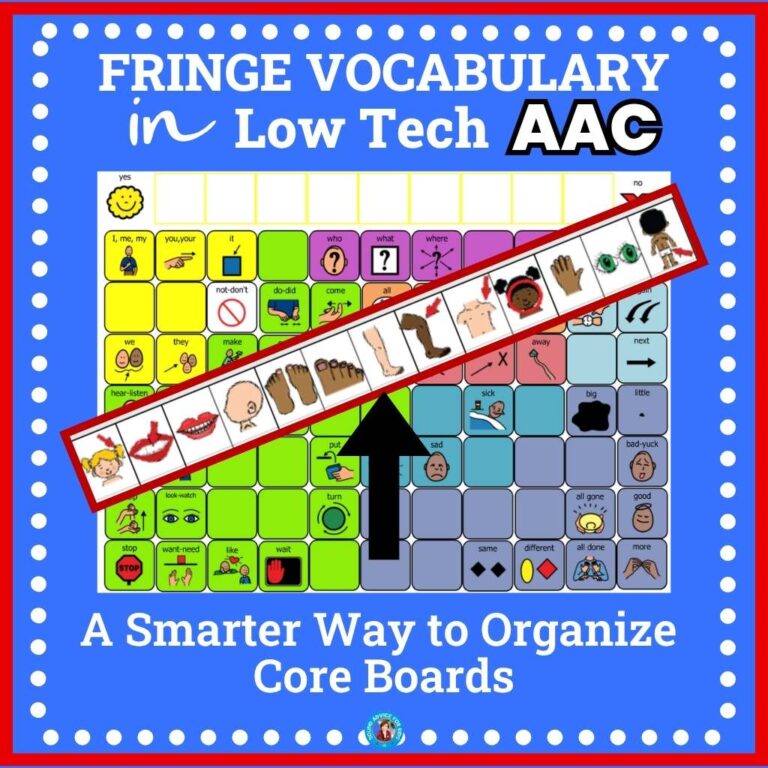
Look at your core board. Right above it, you probably have just over an inch of real estate that doesn’t get much attention. That’s prime territory to add fringe vocabulary. On my board, that space holds nine small squares running across the top. On the far left is a symbol for “Yes.” On the far right is “No.” And in between? That’s where the fringe vocabulary lives.
For words I want available all the time — a handful of high-frequency fringe words that show up constantly — I simply place images directly in those squares. But honestly, I don’t do that much anymore. What I do instead is make horizontal strips, each with nine or ten squares that fit right between the Yes and No anchors. I punch two holes along the top of each strip and use ring binders to attach them to the board, which has corresponding holes to match. The strips flip up and out of the way when you don’t need them, and flip right back down when you do.
This is where it gets fun. Over time, I’ve built up a whole library of fringe vocabulary strips — shapes, weather, colors, snacks, toys, animals, clothing items, you name it. And for individual students, I’ve made personalized strips that no one else has. One of my favorites: I took pictures of a little girl’s favorite books and put them on her own strip so she could request specific titles during reading time. She pointed to The Very Hungry Caterpillar with such intention the first time that I may have gotten a little emotional. I’m not going to confirm or deny that.
When I have a large number of fringe vocabulary strips, I add small tabs at the bottom of each strip — just a little label that identifies the topic. This way I can flip through my stack quickly and land on “snacks” or “weather” without shuffling through the whole collection like I’m looking for a receipt in my purse. It sounds like a small thing. It is not a small thing. It saves so much time.
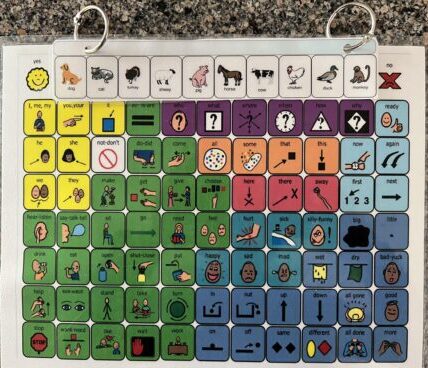
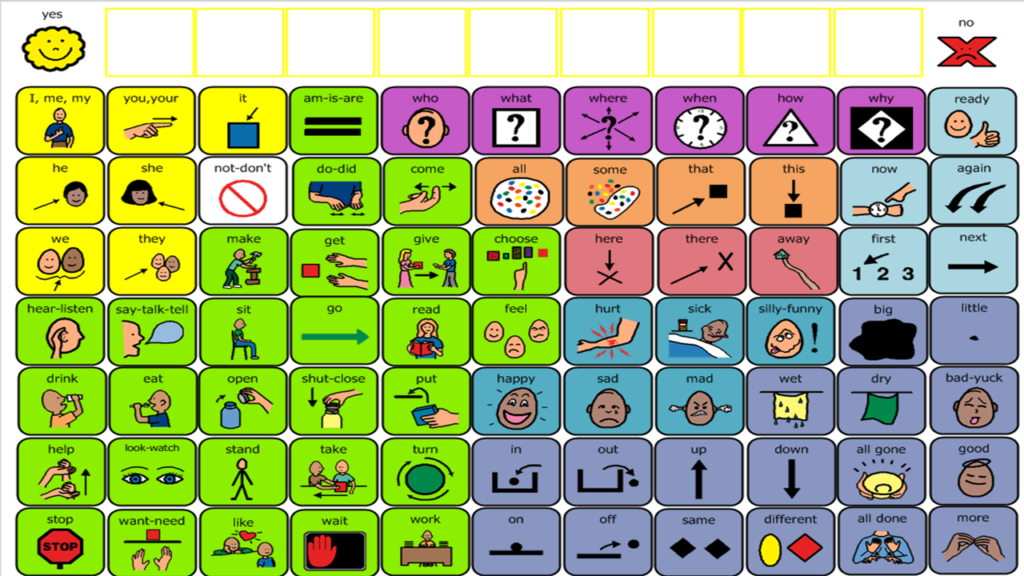
The beauty of the whole system is that the core board never changes. The fringe vocabulary strips come and go. Everything stays organized, everything stays accessible, and — this matters — the student always knows where to look.
Why This Balance Matters
Here’s the thing about fringe vocabulary — it’s where a lot of personality lives. It’s how a student says my favorite color is purple or I want the dinosaur, not the elephant. It makes communication feel personal and connected to real life.
We don’t want to skip it. We just want to organize it thoughtfully.
When core vocabulary stays consistent and fringe vocabulary stays flexible, you end up with a system that does two things at once: it gives students something specific to say in the moment and something reliable to build on over time.
And honestly? It makes the whole thing a lot less stressful to manage — for the student, for the teacher, and for the SLP who’s trying to coach everyone from the back of the room while also keeping an eye on the dramatic play corner.
Not that I’m speaking from experience or anything.
One Last Thing
If you’re feeling the pull to add just a few more words to that core board — I understand. It comes from the right place. We want our students to have everything they need.
But sometimes the most supportive thing we can do is resist that urge, keep the system clean, and trust that a well-organized, consistent board will take them further than a crowded one ever could.
That’s a lesson thirty years in the making. You’re welcome to have it for free.