

How Masked Core Vocabulary Boards Support
Early Communication Success
If you’ve ever looked at a full core vocabulary board and thought, “This is a lot…”—you’re not alone.
I remember the first time I started using a full AAC core vocabulary board during push-in preschool speech therapy. The board had dozens of icons and was completely overwhelming—and not just for my minimally verbal students. Even as the adult in the room, I had to work to find words quickly and figure out how to use them efficiently.
That experience led me to something that has worked much better during early AAC intervention: masked core vocabulary boards.
Who Are Core Vocabulary Communication Boards For?
Core vocabulary communication boards are used with students who have communication delays.
That might include students who:
- are nonverbal and need another way to communicate
- have very limited language
- are just beginning to build a vocabulary and combine words
What Is AAC Core Vocabulary?
Core vocabulary refers to words that can be used across many different situations, environments, and communication partners.
These are words that students can use all day long.
For example:
- go can be used at school, during play, in the bath, or outside
- stop, want, help, look—these words work almost anywhere
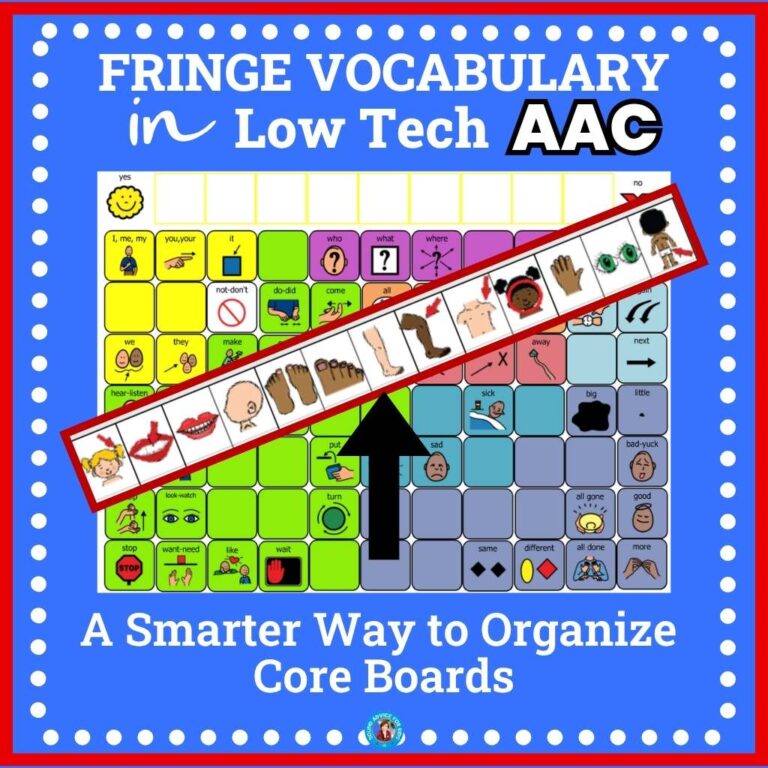
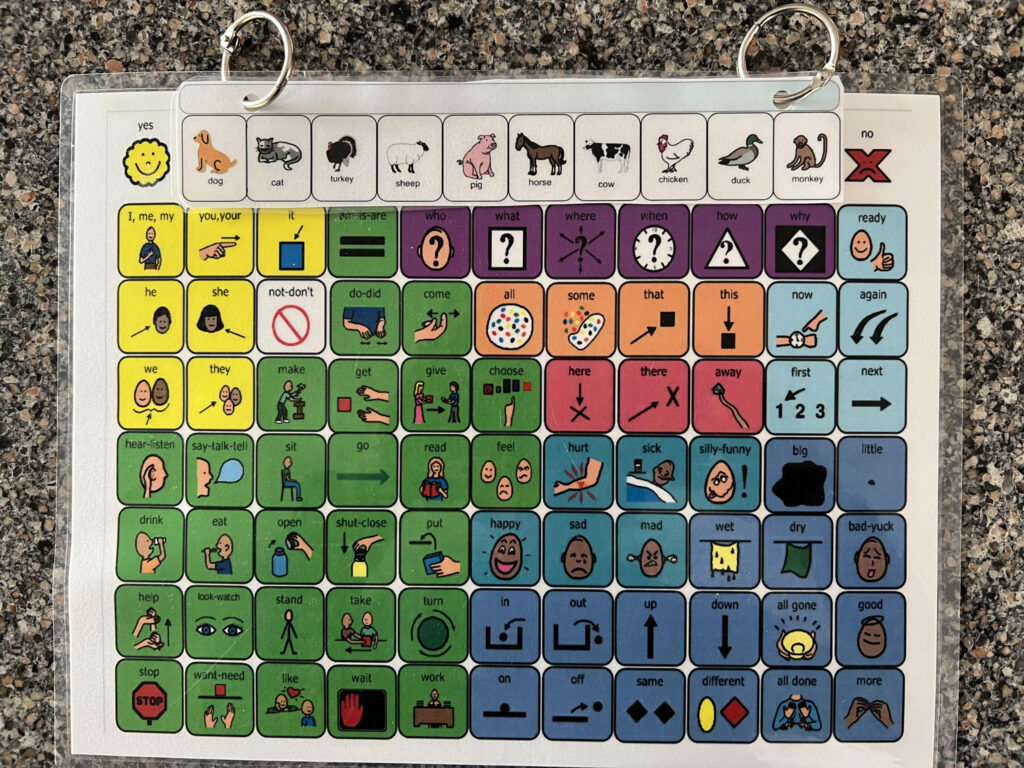
Now compare that to a word like scissors. That’s a useful word—but only in specific situations. You probably don’t need it at snack time or out on the playground. Same with a fringe word like “socks.” Most of the time, you only need this word when getting dressed or undressed.
You definitely need access to fringe vocabulary, but not all the time.
Core vs. Fringe Vocabulary
The difference in a nutshell:
- core vocabulary (flexible, high-frequency words)
- fringe vocabulary (specific, situation-based words)
Both matter—but they serve different purposes.
(If you’re still sorting out the difference between core vocabulary and systems like PECS, you can read more here:
What are Masked Core Vocabulary Boards?
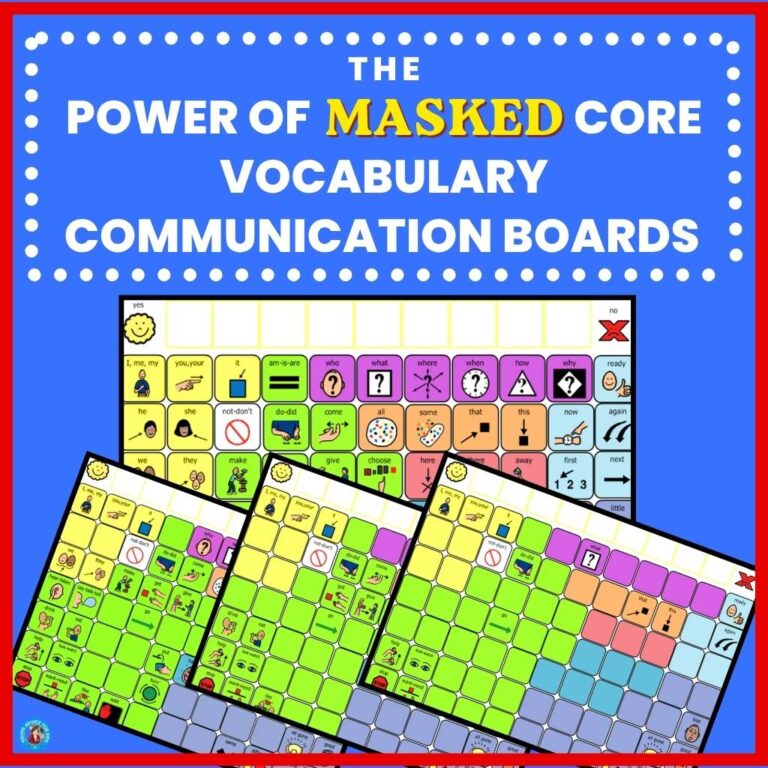
A masked core vocabulary board starts with a full set of words—but not all of them are visible at once.
Some of the icons are covered or “masked”, leaving a smaller number of words available to the student.
The goal is simple:
- make it easier to visually scan the board
- reduce overwhelm
- help students learn where words are
Instead of expecting a student to sort through dozens of icons, we start with a smaller, more manageable set.
Why I Don’t Start with a Full Board
I often use a large board with many icons (for example, a 77-icon board). But I don’t start there.
For many students—especially those with limited language or attention—that many icons are just too much.
It can be:
- visually overwhelming
- difficult to scan
- hard to remember where words are located
I’ve found that when there’s too much on the page, students are less likely to use the board—not more.
What I Do Instead
I start by masking the board down to a much smaller number of words.
For example, I might move from:
- 77 icons → 50
- 50 → 30
- 30 → 21
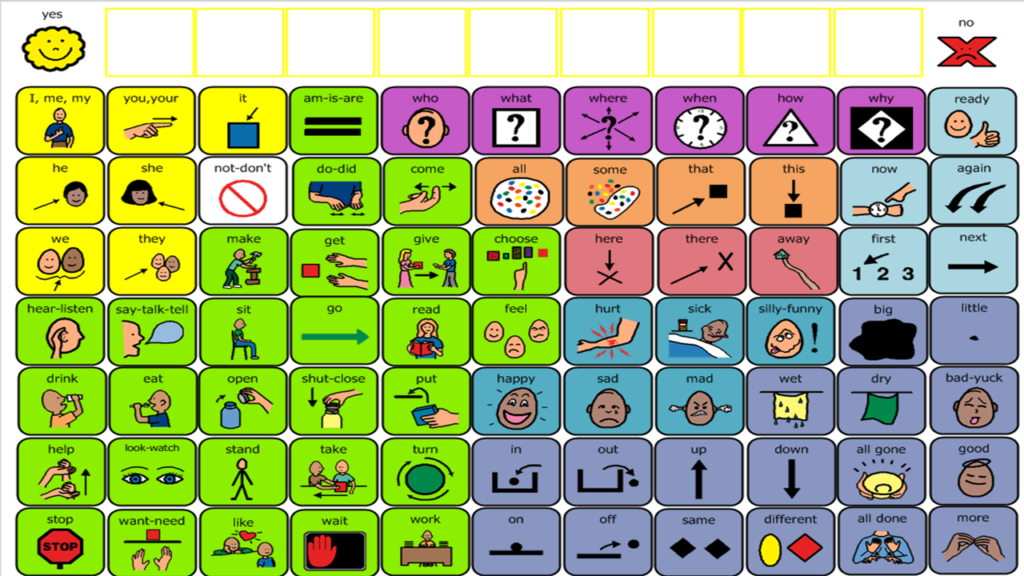
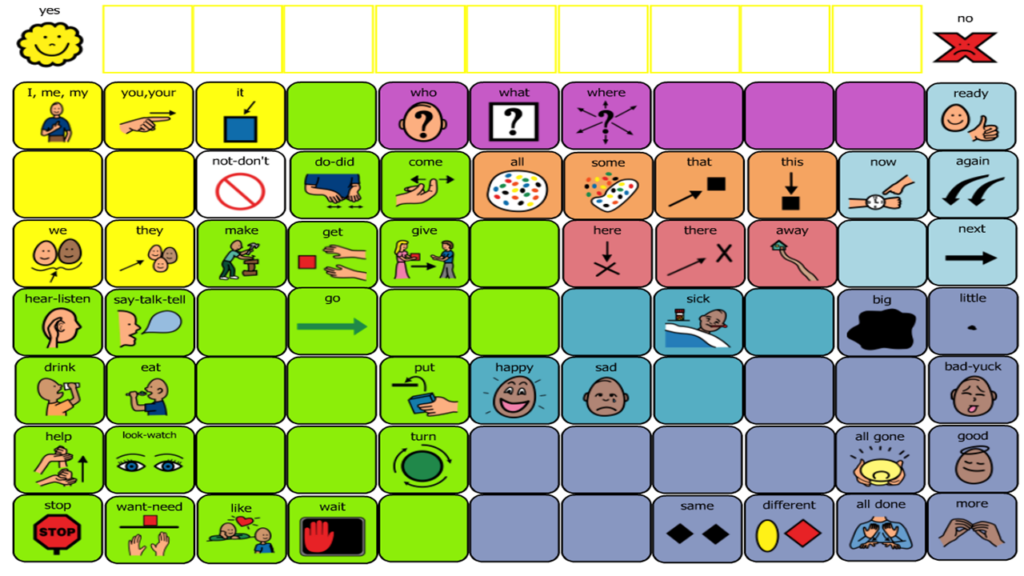
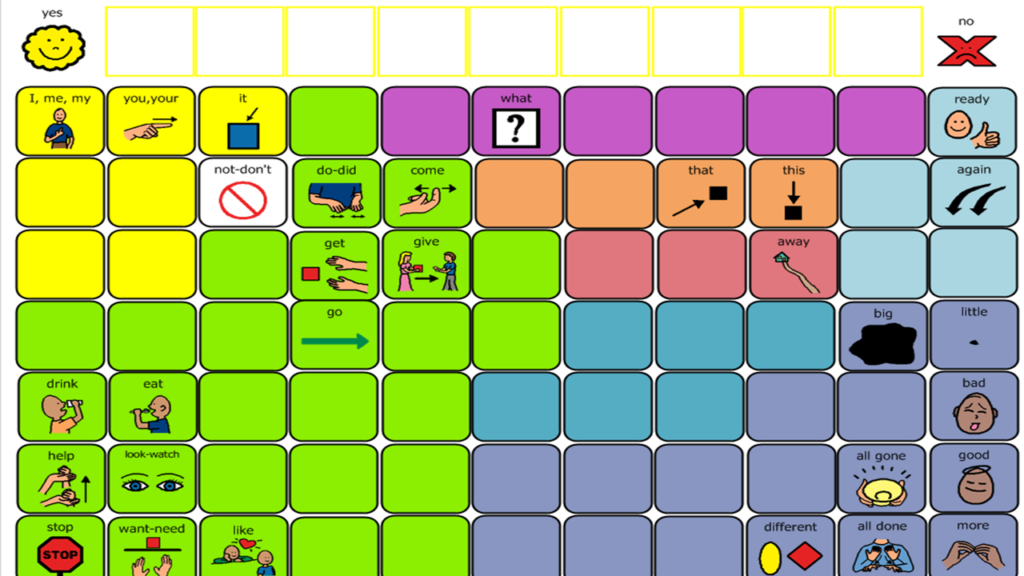
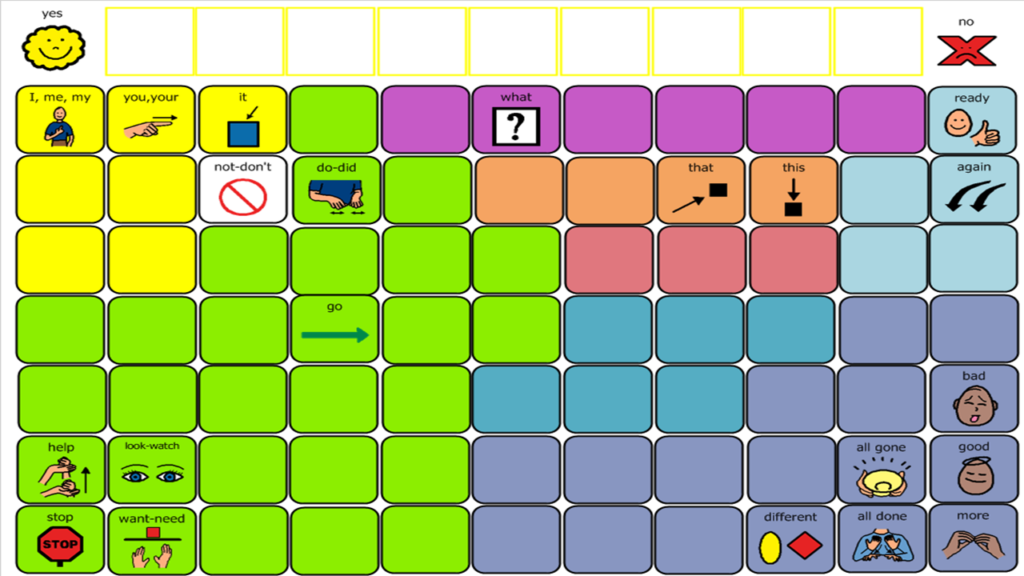
The smaller set—around 20 words—is often a much better starting point.
With fewer icons:
- students can focus their attention
- they can begin to learn where words are located
- they experience success more quickly
And that success matters. It builds confidence and encourages more communication.
The Big Idea
Using a masked core vocabulary board is not about limiting a student’s language.
It’s about making language accessible.
We’re giving students a way to:
- find words more easily
- learn them more efficiently
- and actually use them to communicate
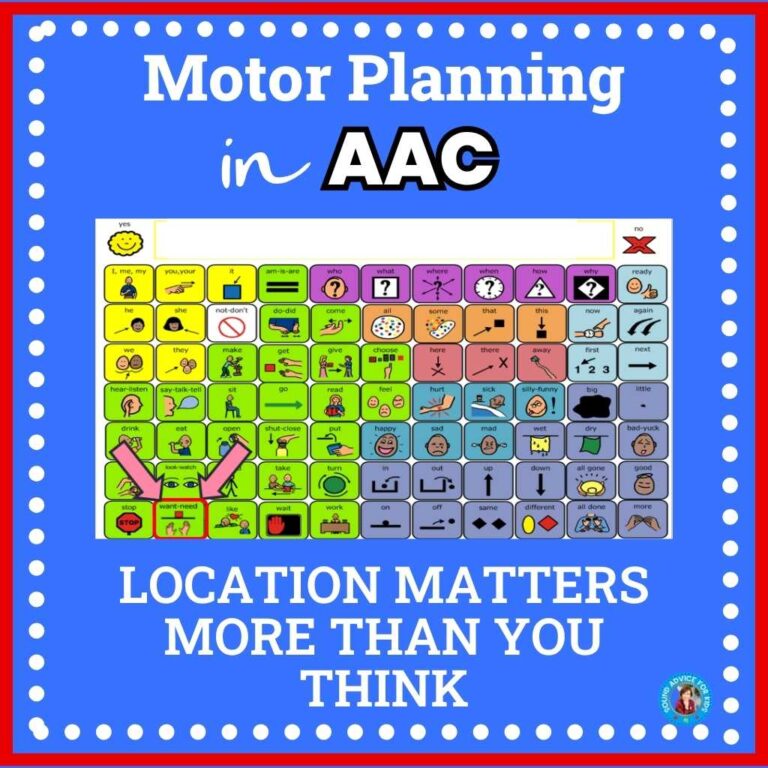
One of the reasons masked core vocabulary boards work so well is that you’re starting with a smaller set of words from a board that’s already been fully planned out. As you gradually unmask more words, those new words are simply revealed—they’ve been in place all along. That means the foundational words never move, and students can keep using the same motor plan as they expand their vocabulary.
With some other types of boards, you start with a small set of words without that long-term layout in mind. As new words are added, the icons shift, and students have to unlearn and relearn where words are. That takes time—and for our students, that’s time we don’t want to waste.
A Final Thought
Masked core vocabulary boards have worked well for me and for many of the students I’ve supported—but like anything in speech therapy, there’s no one-size-fits-all solution.
The most important thing is to:
- look at the individual student
- consider their needs
- and choose a system that makes communication easier—not harder
And that success matters. It builds confidence and encourages more communication.
Once you understand what core vocabulary is, the next step is learning how to teach it effectively. I walk through that here:

If you’ve been using a full AAC Core Vocabulary Communication Board and it hasn’t quite clicked, it might be worth trying a different approach.
Sometimes, less really is more.
ANIMATED STORY WITH MASKED CORE VOCABULARY BOARDS.
TRY IT FOR FREE!