

Word Location Matters More Than You Think
If you’ve ever watched a student use an AAC board and thought, “Why are they taking so long to find that word?” motor planning in AAC may be part of the answer.
It’s easy to assume that AAC is mostly about recognizing pictures or understanding vocabulary. And those things do matter. But there’s another piece that’s just as important—and often overlooked: where the words are located on the board.
What Is Motor Planning in AAC?
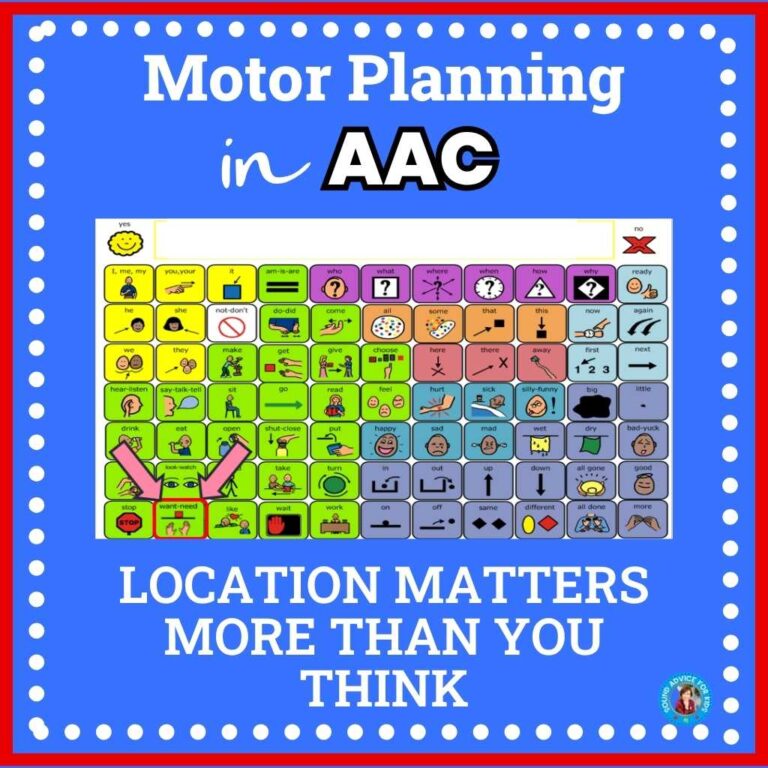
Motor planning is the ability to remember and carry out a movement. Motor planning in AAC means a student learns where a word is located and how to move their hand to get there. Over time, that movement becomes more automatic.
Think about typing on a keyboard. You’re probably not searching for each letter—you just move your fingers. That’s motor planning. The same idea applies to AAC.
Why Motor Planning in AAC Matters for Communication
When a student can rely on motor planning, they don’t have to visually scan the whole board every time. They can find words faster, and communication becomes more automatic.
But when motor planning is disrupted, they have to stop and search. Communication slows down, and frustration often increases. For many of our students, that extra effort is enough to stop them from using the system at all.
Why Word Location Matters on AAC Boards
Where words are placed on an AAC board isn’t random—it directly impacts how easily a student can communicate.
When words stay in the same place, students begin to remember their location. Their hands start to move there automatically. But when word locations change, such as when more words are added to the board, students have to stop and figure it out again.
That small shift can make a big difference.
How Masked Boards Support Motor Planning
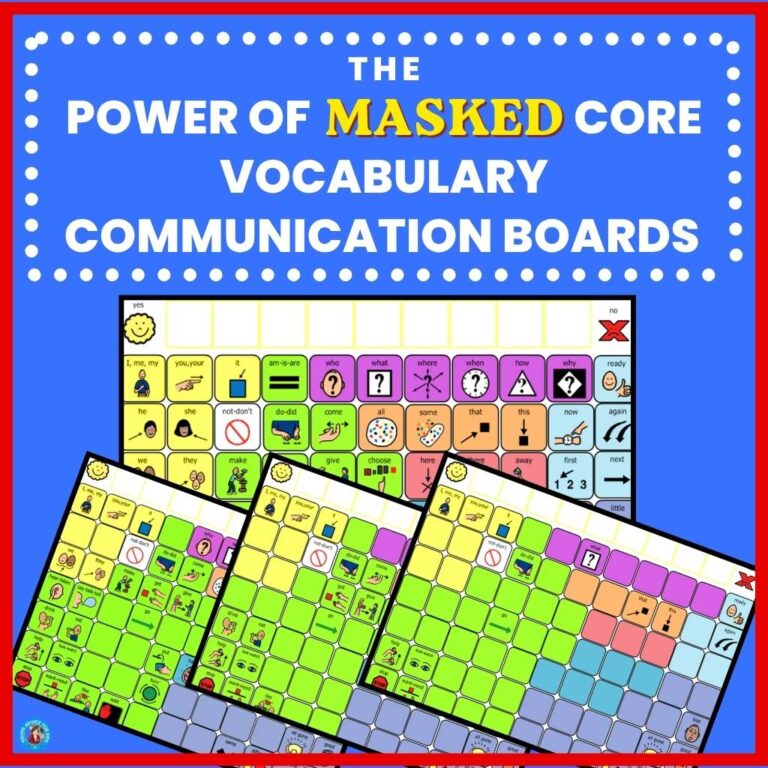
This is where masked core vocabulary boards make a big difference.
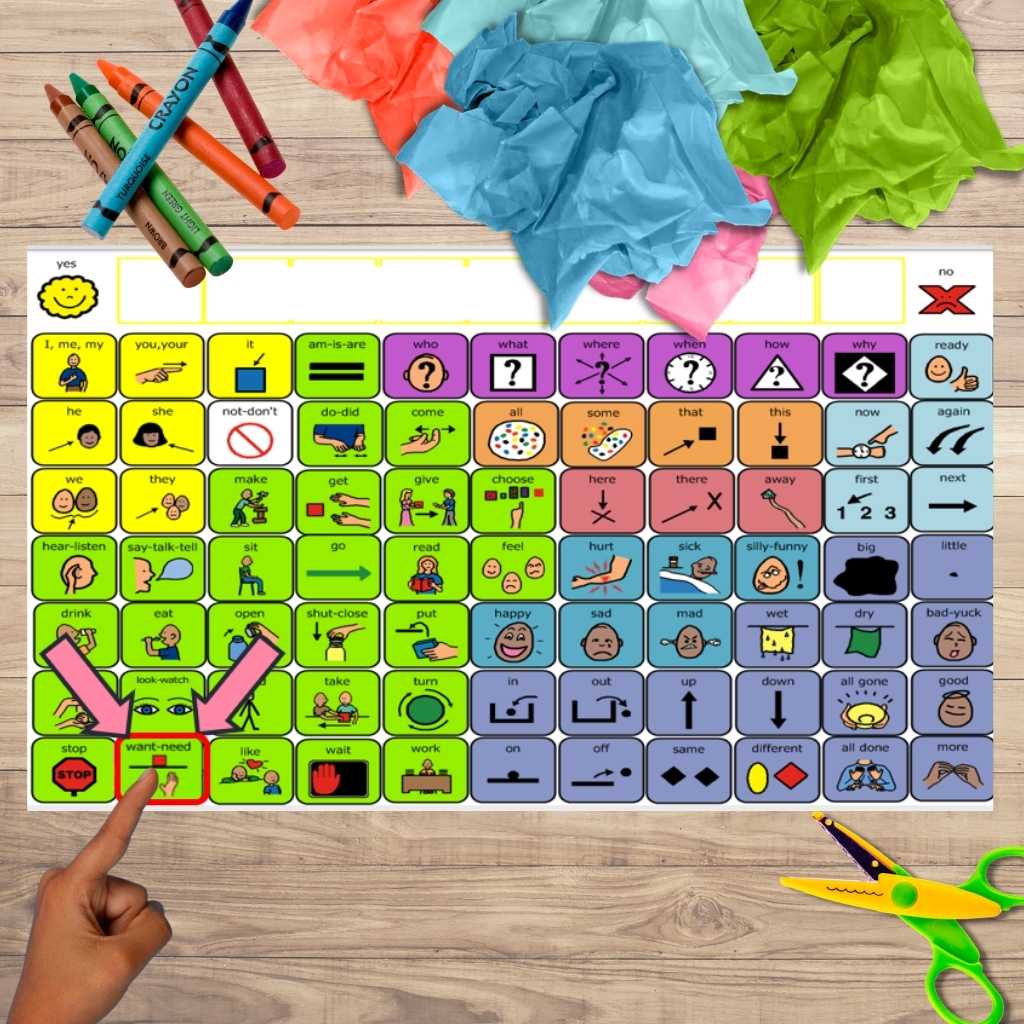
With masked boards, you start with a board that’s already been fully planned out. It has all the words that will be used on the board. But a full board of 77-icons, for example, may be too distracting and overwhelming for our students. To suuport their communication efforts, we can mask, or hide. some or most of the words on the board.
As you gradually unmask more words, the layout stays the same, and the original words do not move. Students keep using the same motor plan as they expand their vocabulary. They don’t have to relearn the location.They just keep building on what they already know.
What Happens When Word Locations Change
Not all AAC boards are designed with the end in mind.
Some systems start with a small number of words without a long-term layout plan in place. As new words are added, icons shift, positions change, and the board is reorganized.
At first glance, this might not seem like a big deal. But for many students, it is.
Imagine a student who has just learned where a word is. Their hand automatically moves to that spot—and suddenly the word isn’t there anymore. Now they have to stop, look again, search for the word, and relearn its new location.
Instead of communication becoming easier, it becomes harder.
A Simple Example
Let’s say a student learns that “ready” is in the upper right corner. Their hand starts to go there automatically.
But then the board changes, and “ready” moves.
Now that automatic movement doesn’t work anymore. The student has to think about it again. For some students, that small shift is manageable. But for others, it’s a major barrier—and it can slow down communication in a big way.
To see a visual example of this, check out my YouTube video: The Value of Using “Masked” Core Vocabulary Communication Boards (time stamp: 4:15 – 7:00 minutes)
Why Motor Planning Consistency Matters in AAC
Many of the students we work with need repetition, benefit from consistency, and have difficulty relearning new patterns.
When we change where words are located, we’re asking them to unlearn what they just practiced, learn a new motor pattern, and do all of that while trying to communicate.
That’s a lot—and it’s often unnecessary.
Think about how frustrating it would be if there weren’t a standard QWERTY keyboard. Every time you picked up a different device, you’d have to hunt and peck all over again just to find the letters.
The Goal: Build Automaticity Through Consistent Motor Plans
The goal isn’t just for students to recognize words. It’s for them to find and use those words quickly and efficiently.
That happens when:
- words stay in the same place
- motor plans can develop
- students don’t have to start over
Masked core vocabulary boards support this from the very beginning.
We’re not just teaching words—we’re teaching students how to access those words automatically.
If you’re just getting started using communication boards in the classroom, there are three essential ingredients to be successful. I walk through that here:

A Final Thought
Motor planning in AAC isn’t always the first thing we think about—but it should be part of the conversation.
Because when students don’t have to search for words every time, they can focus on what really matters: communicating.
If you’ve been using boards where words move as vocabulary expands, it might be worth taking a closer look at how that’s impacting your students. Sometimes a small shift in how the board is organized can make a big difference in how students use it.